Reeoka LLC
30 N Gould St, Ste N
Sheridan, WY 82801
United States
info@reeoka.com

30 N Gould St, Ste N
Sheridan, WY 82801
United States
info@reeoka.com

Teach them a game adults actually play.
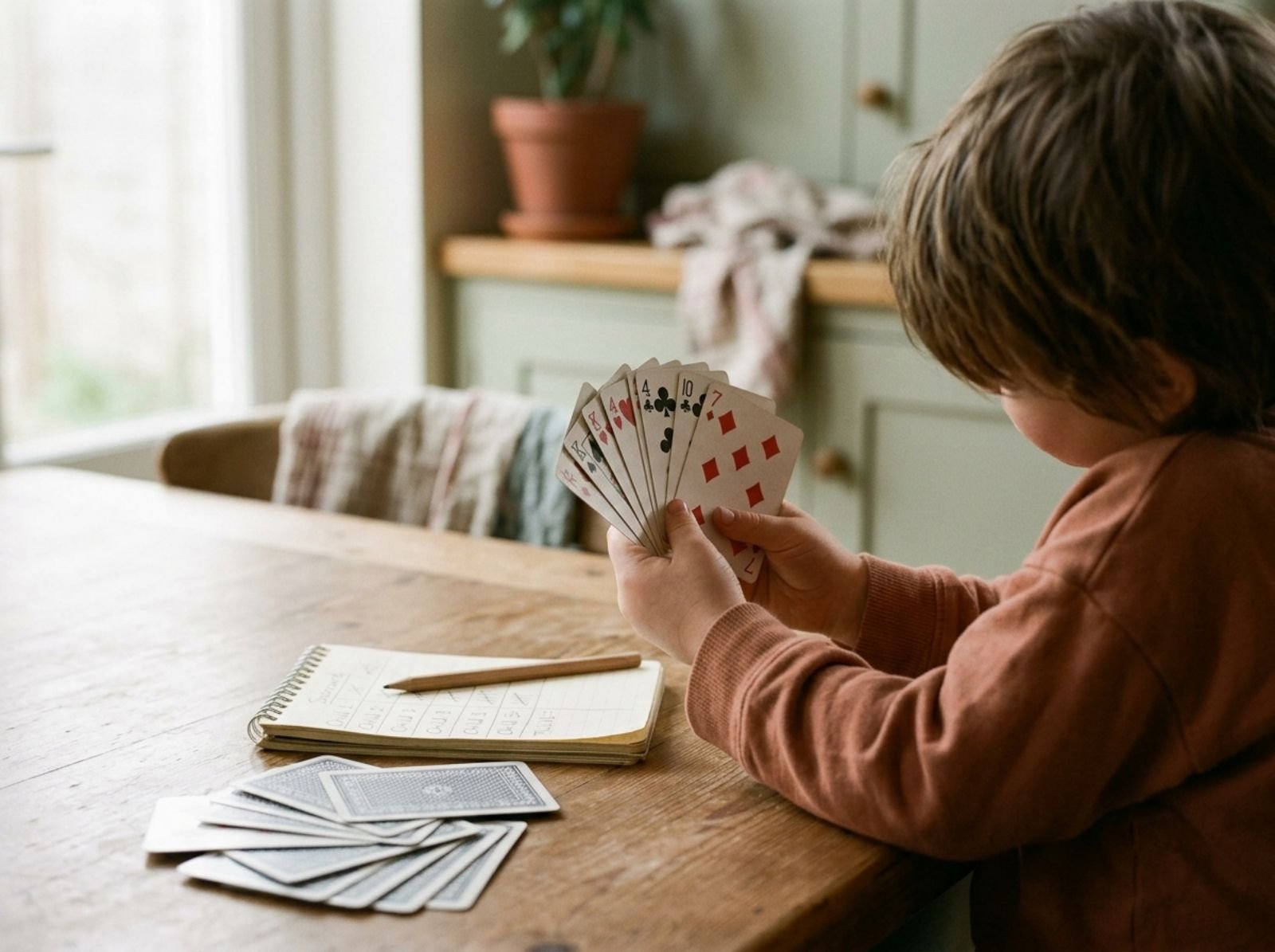
One deck, half an hour, and a skill they keep for life.
Card games involve probability, memory and reading other people, all at once and without any of it being announced as learning. Playing again immediately after losing is the part that builds tolerance for it.
Do not introduce gambling with real stakes.
Cards back in the box.
Fold it in five minutes, then race it across the table for half an hour.
A real job, done properly, by someone who is four.
One of you thinks of something. The other has twenty yes-or-no questions.
Every blanket in the house, one afternoon, one secret headquarters.
Throw a soft ball around the room. Anyone who makes a sound is out.
They design the board, write the rules, and then make you play it.