Reeoka LLC
30 N Gould St, Ste N
Sheridan, WY 82801
United States
info@reeoka.com

30 N Gould St, Ste N
Sheridan, WY 82801
United States
info@reeoka.com

What randomised studies actually found about adult coloring and anxiety, why it seems to work, and five ways to get more calm from a coloring book.
Adult coloring books arrived with big promises on their covers: calm, mindfulness, stress relief. It is fair to ask whether any of that holds up, or whether it is just a pleasant hobby with good marketing. The honest answer is somewhere in between, and the details are useful if you want to get the most from it.
The research is small but fairly consistent. In a 2017 University of Otago study, 104 university students were randomly assigned to either a week of daily coloring or a week of logic puzzles. The coloring group reported lower depressive symptoms and anxiety afterwards; the puzzle group did not.
A 2018 study in the journal Art Therapy raised 160 students’ anxiety on purpose, then gave them one of four coloring tasks, including a page from an ordinary adult coloring book. All four reduced anxiety, and the coloring book page worked as well as the others. A hospital trial in Australia found something similar in a far more stressful setting: emergency department patients given a coloring pack reported less anxiety two hours later than those given a placebo pack.
What the research does not show is that coloring treats anxiety disorders or depression. It is a low-cost, low-effort way to bring everyday stress down. Therapeutic, as one psychologist put it, but not therapy.
The likeliest explanation is attention. Coloring gives the mind one small, absorbing job with clear edges and no consequences. That is enough to crowd out the background loop of worry without demanding the effort that a puzzle or a new skill would. It is close to what meditation asks for, without the instruction to empty your head.
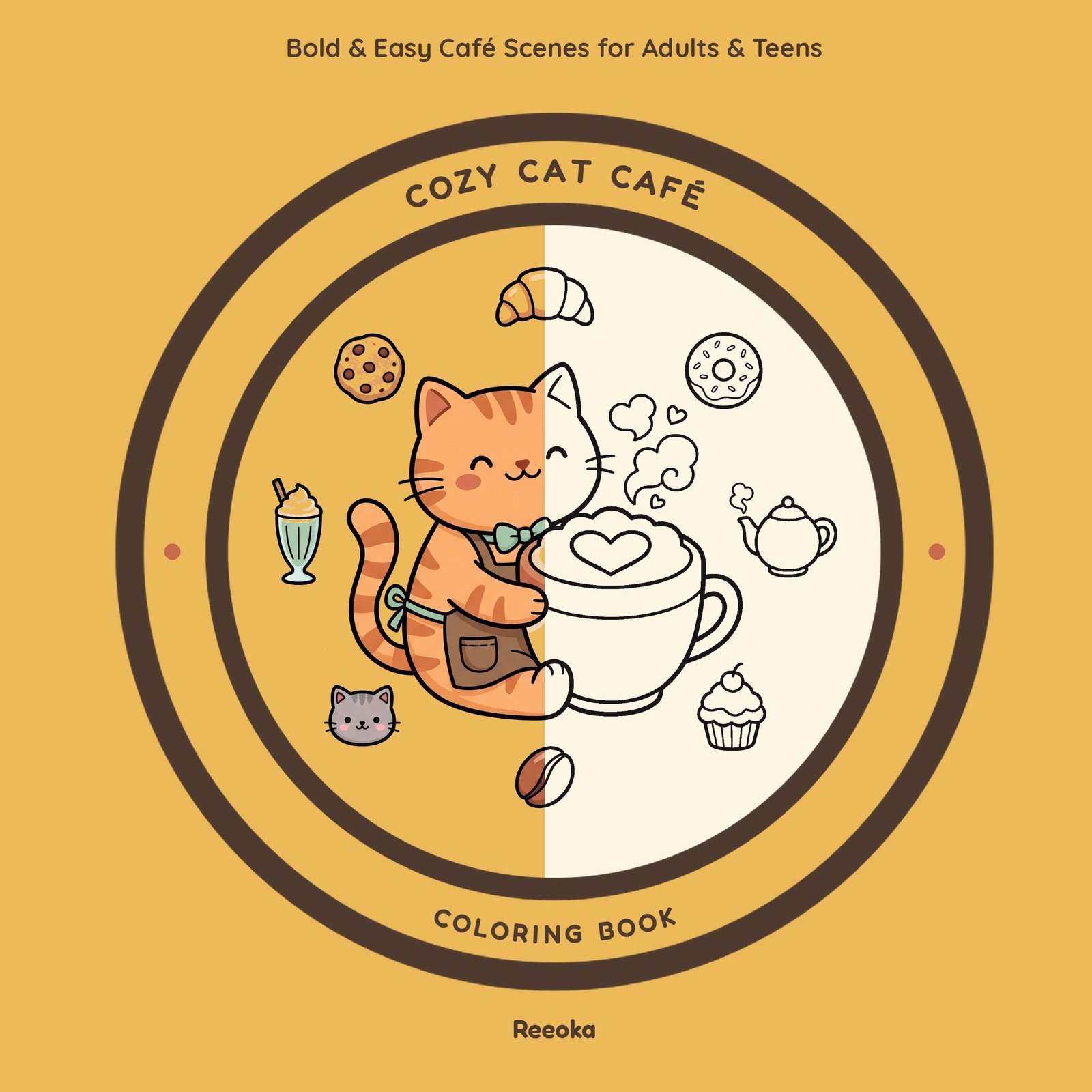
Cozy Cat Cafe was drawn with those choices in mind. Fifty-one full-page scenes follow one small cat cafe through a day, from opening up in the morning to closing time, in thick even outlines with roughly fifteen to thirty large areas per page, so a page takes twenty to forty-five minutes and markers do not fight the detail. It also includes three sheets of cut-out cat stickers, and comes as US Letter, A4 and a tablet edition for coloring on a screen.
Coloring can help with everyday stress, but it is not a treatment for anxiety or depression. If low mood or worry is affecting your daily life, please speak to a doctor or a mental health professional.
